

A two-way pull
Asset markets are presently becalmed, with large forces acting against each other and holding valuations in place. At the base of the present rich index levels in equity markets and high commodity prices is a strong underlying rate of nominal growth. A world economy with an estimated 2026 real GDP expansion of 3% and headline inflation of around 4% sums to 7% nominal growth. This underpins the revenue potential and profitability of listed companies and suggests near-term demand for commodities will be strong. But at the same time, such levels of underlying nominal growth have provoked longer-term G10 government yields to multi-decade highs: bond investors fear inflation.
The uncertainty this collison of forces creates suggests that a largely balanced positioning for portfolios is a wise approach. Our proprietary EnCor asset allocation model retained its moderate weights in equities (chiefly non-Tech) and significant off-benchmark weights in commodities at the end of July. Weights in bonds were moderately raised at the expense of cash, as yield-to-maturities of c.6% for CZ corprorate bonds and 4%-5% for US government bonds now look more attractive.
Allocation for a typical moderate risk client into Q3 2026*
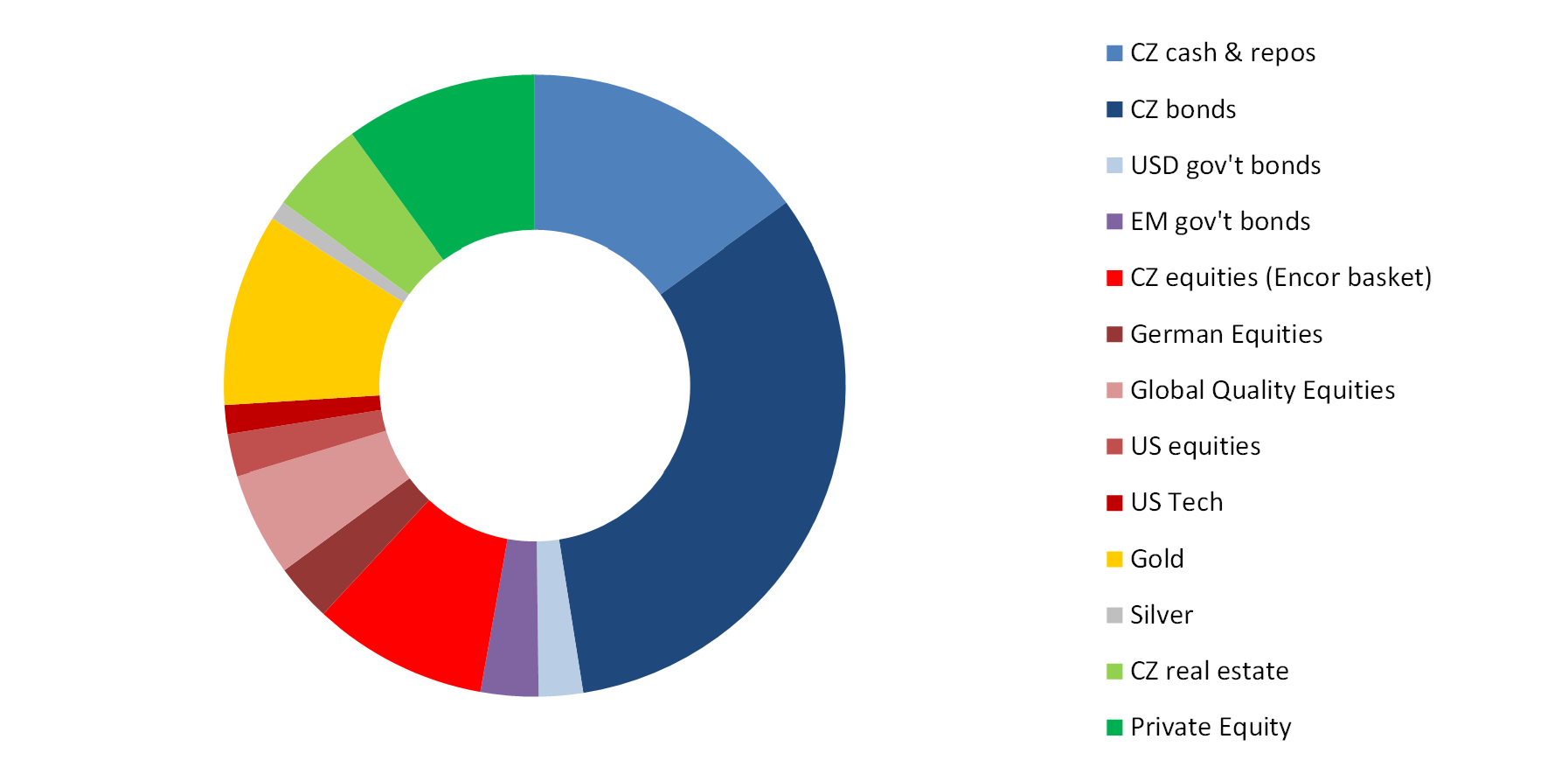
Source: EnCor Wealth Management proprietary asset allocation model.
See disclosures at the bottom of this text. * Weights as of end July.
Allocation of our “Rustovy” Dynamic OPF – Q3 2026*
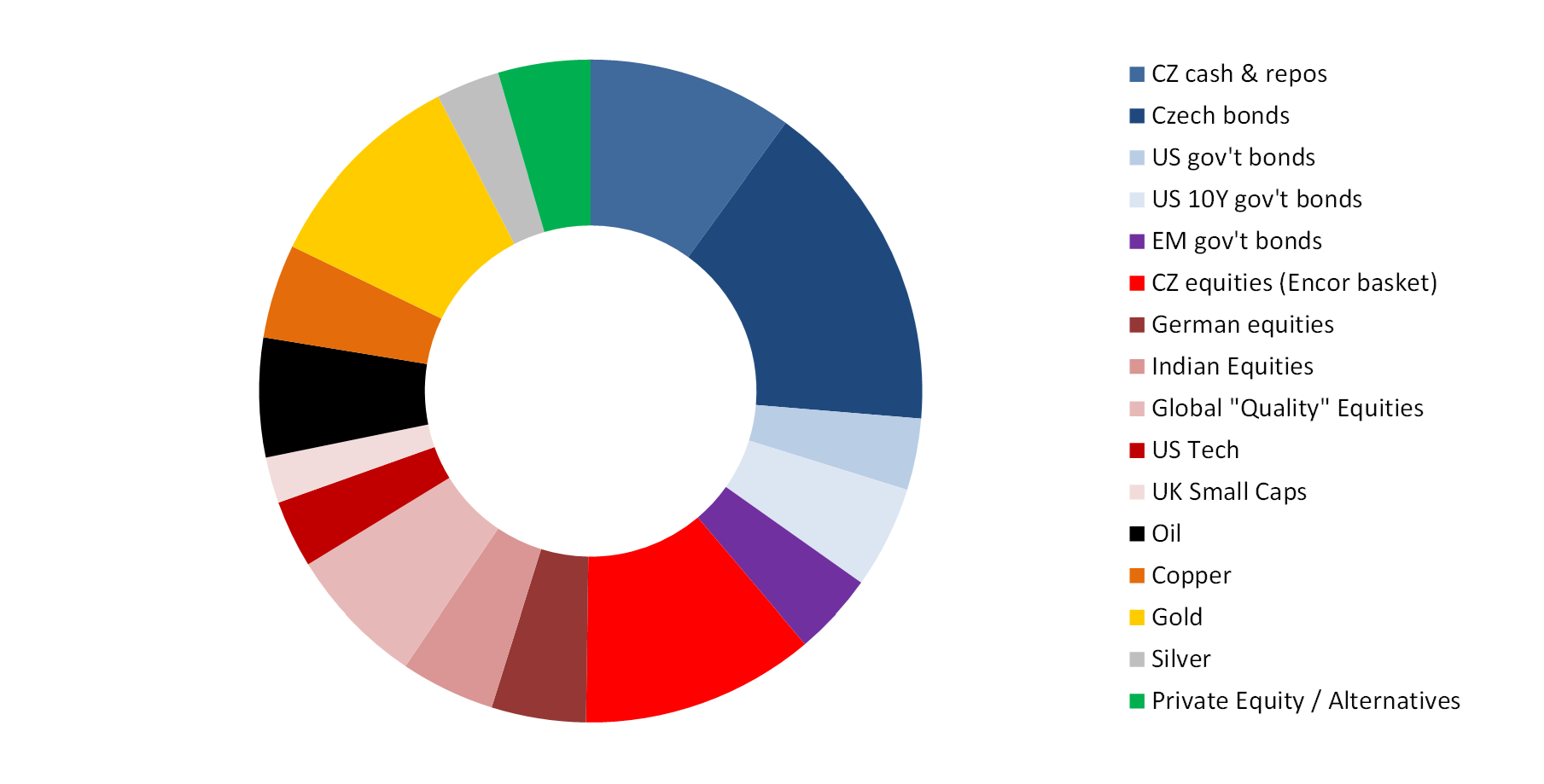
Source: EnCor Wealth Management proprietary asset allocation model.
See disclosures at the bottom of this text. * Weights as of end July.
As discussed in our previous Navigator blog, capital spending on AI is dominating the pattern of growth in the US and East Asian economies. Other arenas of activity, including private consumption, are being “crowded out”: consumers, perhaps fearing for their jobs and/or worrying about inflation, indicate relative inactivity in recent surveys. It really has been the “AI boom” that is propelling profitability growth in equity markets and, increasingly over the last quarter, corporate bond issuance in the debt markets. This taking on of very large amounts of debt to finance future growth has echoes for some of 1999-2000 (“dotcom boom-and-bust”) and the 2007-2008 Great Financial Crisis. It is the distance of that growth into the future that matters. At present, the mega tech stocks in the US are trading at 25-30x present annual earnings. Their share prices stopped rising, as a group, in June.
The bond markets price government and corporate debt into the future. The yields, based on the debt coupons that the companies pay, become the rate at which future profits can or should be discounted back to the present. This is the cost of capital. Even if future profits of, for example, AI hyperscalers are huge, they shrink at today’s valuation if the cost of capital rises. The cost of capital is rising specifically because the AI universe is issuing bonds and taking on private debt in such size. And it is rising in general across economies because of near-term inflation fears connected with microchip costs, energy prices rising, food prices spiking and stretched supply chains. These drivers of inflation are not just linked to AI but to the general condtion of the world economy and the impact of the 2026’s ongoing low-level conflict in the Persian Gulf and the hot war in Ukraine.
Central Bankers can see this inflation but, due to official mandates and/or political pressure, are not opting to hike interest rates at a fast pace. The markets, via longer-term bond yields hitting multi-decade highs, are tightening monetary conditions for them. This policy uncertainty, coupled with scant evidence of the willingness of G10 governments to rein in fiscal deficits has discouraged investors around the world from holding G10 government bonds. Investors, especially in Asia, continue to diversify into real assets, including precious metals.
Our asset allocation for Q3, with weights spread among equities, commodities, and, mainly, Czech bonds is positioned for volatile markets, as investors presently absorb contrasting news-flow. Our retention of cash positions look to dampen volatility for our clients’ portfolios until the path of the global economic growth, consumption and inflation becomes clearer.
Disclaimer: This article does not constitute an investment advice, or a recommendation to buy or sell a specific security. Please contact us at [email protected] if you would like to consult on your individual situation.
Author: Mark Robinson (31 August 2026)